


If Bear Grylls ever had to survive a modern engineering organization instead of a rainforest, the show would look different.
Less cliff jumping.
More Slack notifications.
Fewer snakes.
More “got a sec?” messages that somehow turn into three-hour detours.
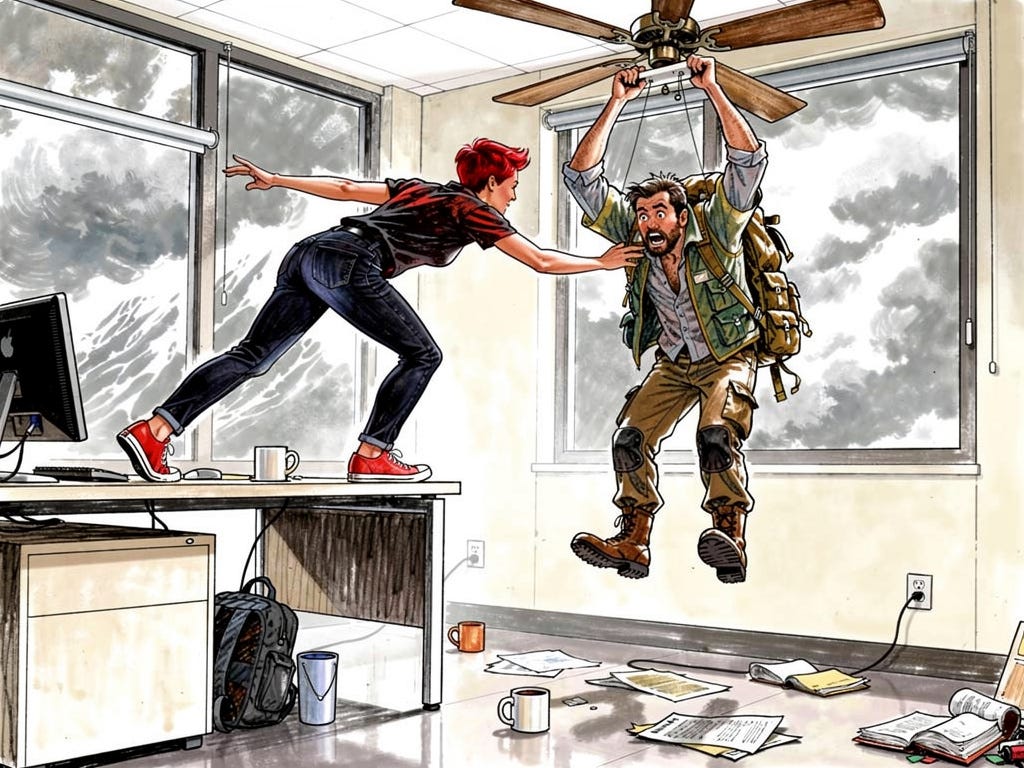
And somewhere between building a shelter and squeezing water out of moss, he’d learn the survival skill most of us don’t learn early enough:
Assertiveness.
The real kind.
The kind that gets you out of the woods long before you’re lost.
In engineering and product teams, the danger rarely arrives as a bear. It arrives as a vague request, an unclear decision, a shifting priority, or a timeline you agree to even though you already know it won’t hold.
Most of us — engineers, PMs, designers, operators — respond with the same instinct: be helpful, be flexible, keep things moving.
Ironically, that’s how we get lost.
When the compass starts to twist
You know this moment well.
A PM asks, “Can we get this out by Friday?”
You know the answer is no, but saying it feels like letting someone down — the PM, your lead, your team… possibly the universe.
Scope shifts mid-sprint.
You think, “I’ll mention it later,” which is code for “eventually, when the consequences catch up.”
Someone asks for a timeline, and you respond before you have the full context.
None of this is incompetence.
None of this is fear.
This is helpfulness without boundaries — collaboration turned up just a bit too high.
In the wilderness, this is how you start walking in circles.
In teams, it’s how small cracks turn into fires.
Assertiveness: the actual survival skill
Assertiveness isn’t aggression, it isn’t volume or force.
It’s clarity, directness, and respect combined.
The middle lane where:
passive avoids,
aggressive attacks,
assertive engages.
It’s the lane where the trail becomes visible again.
You bring information into the open early.
You name reality before reality names you.
You give the team the data needed to make good decisions.
Assertiveness sounds like:
“We have three user-impacting bugs. Fixing them first moves us to Monday.”
“I need the designs by Tuesday to make Friday possible.”
“This decision happened without engineering input, let’s review before we commit.”
Clear. Calm. Effective.
No drama. No edge.
Just professional navigation.
A simple move that works most of the time — and you won’t know unless you try
Try this:
“Give me 24 hours to review and I’ll come back with something accurate.”
This single sentence:
buys time for judgment instead of reflex
reduces stress
prevents avoidable mistakes
protects your credibility
signals that your commitments carry weight
It’s the communication equivalent of stopping to check the map before everyone hikes deeper into the wrong direction.
Assertiveness brings people with you
One of the most effective assertive habits is inviting people into the conversation early — especially when something feels off-track.
Instead of letting frustration build, try:
“I need to talk about something affecting predictability. It’s about how we’re handling priority changes. I want to find a better approach together. Can we spend 15 minutes on this tomorrow?”
This isn’t confrontation, it’s alignment.
It gives people context, it prepares them for the discussion. It creates shared responsibility instead of silent resentment.
That’s how you get out of the woods together.
Not an engineer skill — a team skill
Assertiveness is not self-protection.
It’s team protection, it strengthens trust, it prevents rework, it reduces surprises.
It keeps expectations aligned.
Everyone benefits:
Engineers get clarity.
PMs get reliability.
Designers get predictability.
Leadership gets fewer fires.
And yes — you might be the one who helps your PM or designer learn this skill.
That’s not extra work. It’s culture-building.
Building the muscle
Assertiveness isn’t personality.
It’s practice.
Choose clarity over comfort.
State what you see.
State what you need.
Set expectations early.
Invite people into difficult conversations.
Replace hedges with strong patterns (“Here’s what I’m seeing…” “I need…” “I recommend…”).
Use the 24-hour buffer when needed.
Stop hacking through the underbrush alone. Instead create paths the whole team can walk.
Getting out of the woods
Assertiveness keeps projects aligned, communication grounded, and teams sane.
It protects time and energy.
It clears confusion before it grows roots.
It turns you into the person others rely on — not because you absorb everything, but because you help the team navigate.
That’s the survival skill Bear Grylls forgot to mention.
And if he ever joined a cross-functional team, he’d wish someone taught him sooner.
Before you go, little food for thought:
Where do you feel “off the trail” in your current project — and what’s the assertive statement that would bring everyone back on the same map?

If you’d like a workshop for your team on assertiveness, clarity, or cross-functional communication, comment “help” or ping me on LinkedIn. Or subscribe. Or both. Or everything. Or just enjoy reading :)